

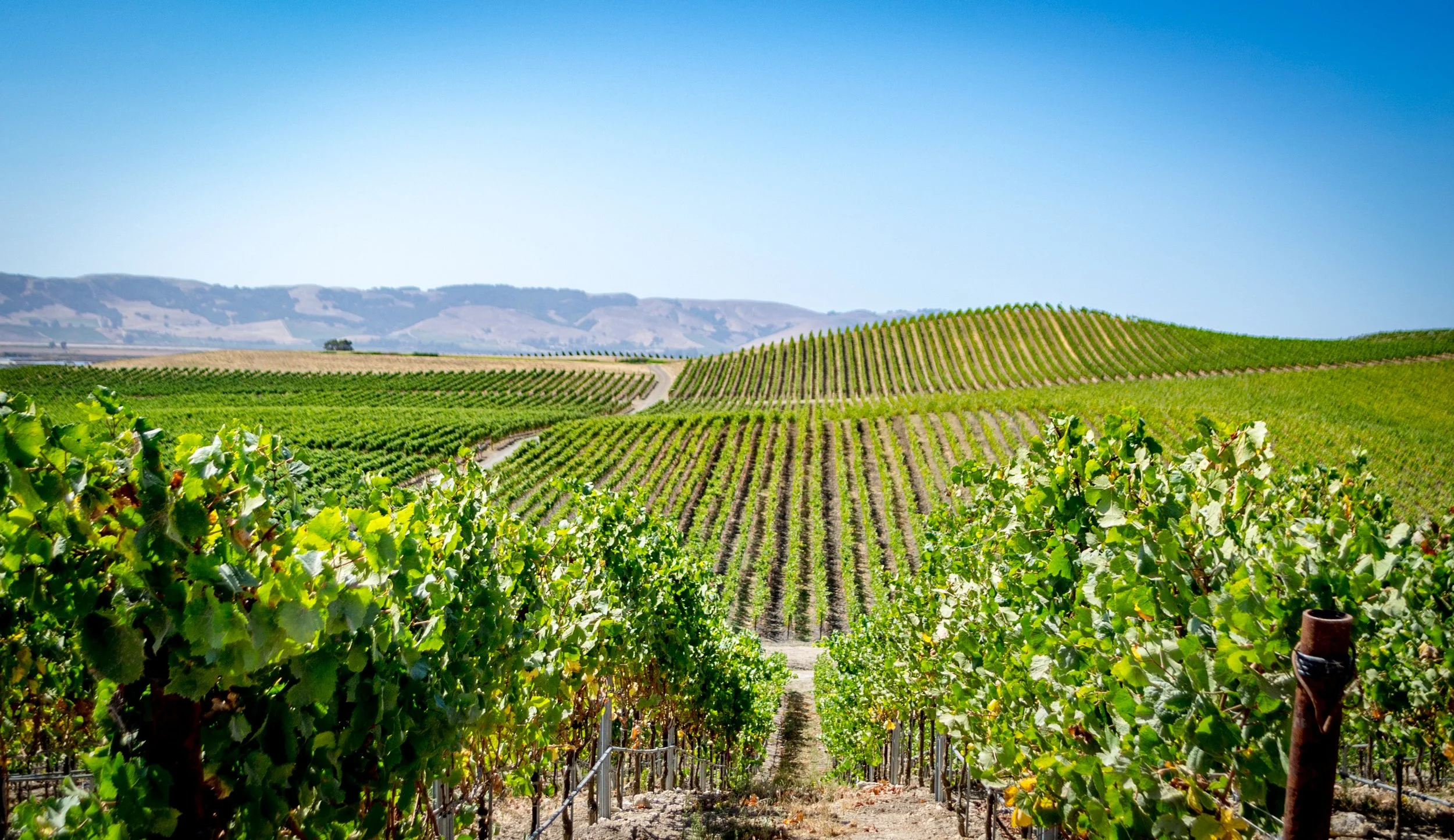
An Opening in a Finite Landscape
The Long Term Case for Napa Valley Land
September 2026
The wine industry is experiencing a meaningful downturn. Global consumption has shifted, supply has moved ahead of demand, and grape prices and contract values have softened. Wine Country land prices have begun to reflect that change.
For buyers, this cyclical turn creates a rare opening: the opportunity to acquire irreplaceable land at an entry basis the market has not offered in years. Wine demand will rise and fall, but the scarcity of the land itself does not.
The Fixed Geography
At the heart of this opportunity is a simple fact: Napa's land base is finite.
When the county enacted the nation's first Agricultural Preserve in 1968, it halted the suburban expansion that transformed neighboring valleys. Today, only approximately nine percent of the county is planted to vineyard, and less than three percent of its remaining acreage is physically or legally suitable for new planting.
That is what separates Napa from an ordinary agricultural market. Prices move with the cycle, but the supply of land beneath them cannot expand. There will never be another Oakville bench, another Rutherford parcel, or another hillside above Stags Leap with the same combination of location, aspect, soils, and microclimate.
The market softens with the cycle. The geography does not.
When the Cycle Turns
During periods of peak demand, competition pushes land prices well ahead of operating fundamentals. Buyers accept elevated valuations, compressed diligence windows, and ambitious farming assumptions simply to secure a parcel before someone else does.
A softer market restores balance. Sellers become receptive to realistic pricing, extended evaluation periods, and rigorous scrutiny of vineyard health, water security, contracts, permits, and future capital requirements.
That does not make every property suddenly attractive. It means the quality of the opportunity can be evaluated with precision. For the first time in years, capital has the breathing room to distinguish between an asset that is temporarily out of favor and one that is fundamentally impaired.
What Makes Land Worth Acquiring
A lower price alone does not make a parcel a sound acquisition. Some properties are discounted because they require extensive replanting, lack reliable water, face severe fire or access challenges, or carry unresolved agricultural and residential limitations.
The true opportunities are properties whose long-term fundamentals remain intact:
A prime appellation and distinctive terroir
Favorable aspect, elevation, drainage, and microclimate
Reliable water access and proven infrastructure
Healthy vineyard blocks or a clear, manageable replanting plan
Documented agricultural, residential, or winery entitlements
A location and character that cannot be replicated elsewhere
The objective is not simply to buy land at a discount. It is to secure enduring qualities at a rational entry basis.
Beyond the Annual Grape Check
The value of a vineyard has traditionally been measured through yield, grape pricing, and annual harvest revenue. Those metrics remain important, but they no longer define the asset.
Modern vineyard ownership relies on water security, labor efficiency, conservation, technology, and long-term flexibility. Precision irrigation, soil sensors, satellite mapping, and targeted farming practices improve resource management and identify vine stress long before it impacts fruit quality or volume.
The most resilient properties also support more than one narrative. Working agriculture coexists with conservation easements, an architectural residence, hospitality, or a custom production relationship with a respected winemaker. In that context, the value of the land extends far beyond a single season's harvest. It lives in the property's provenance, entitlements, infrastructure, and ability to hold utility across changing cycles.
A Longer View
The current downturn will not resolve every challenge facing the wine industry. Consumption patterns will continue to evolve, and vineyard economics demand discipline. But cycles do not alter the fundamental reality that makes prime Wine Country land scarce.
For buyers with a long-term perspective, the present market delivers what was impossible to find at the height of the last cycle: time to evaluate, leverage to negotiate, and access to legacy properties that rarely surface.
The exact bottom of a market is visible only in retrospect. Waiting for complete certainty means waiting until competition returns and the window narrows.
The defining question is not whether the market has reached its absolute low. It is whether a particular property offers irreplaceable qualities at an entry basis that makes sense for the next decade or two.
Wine demand will fluctuate. Market sentiment will move in cycles. But Napa's finest land remains finite, protected, and impossible to reproduce.
For the disciplined buyer, that is the opening this downturn creates.