

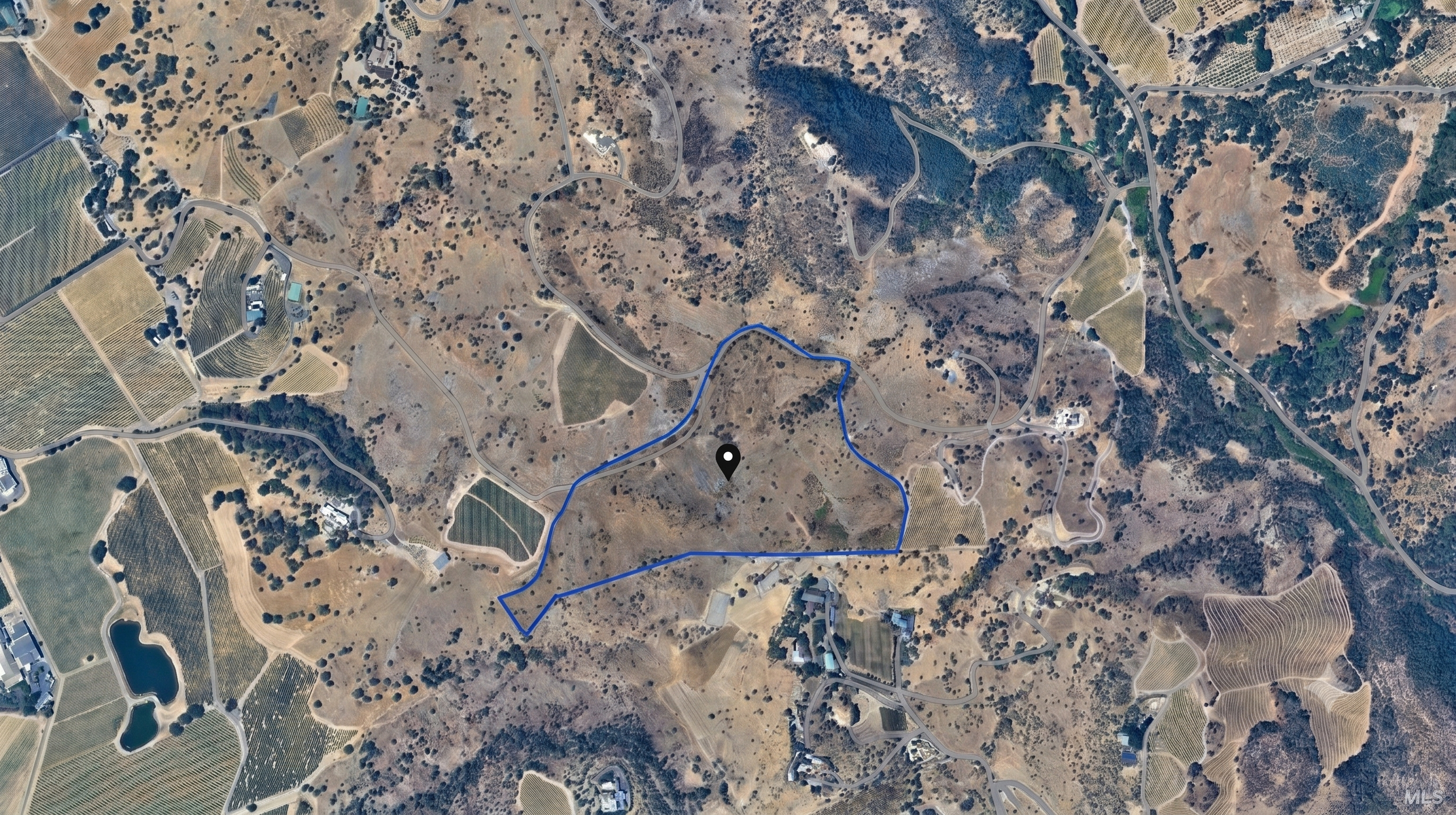
Room To Grow
The Rarest Thing in Wine Country Isn't the View
July 2026
Room to Grow
Luxury real estate generally sells on what you can see. The location, the view, the acreage, the light, the construction. While those factors are important, the most valuable property trait is often invisible: its potential for growth.
Often two properties can look almost the same and yet hold completely different futures. One has the capacity for a second residence, an expanded vineyard, or a guest house while the other simply does not. Real room to grow is uncommon in Wine Country, and recognizing it is where the advantage lies.
What Sets the Ceiling in Napa
In Napa, how much a property can become is governed, more than almost anywhere, by water. Not by whether water is present, but by how much a given parcel is permitted to draw. That figure is fixed by law.
Since 1991 the county's Water Availability Analysis has assigned every property a groundwater budget based on where it sits. A parcel on the valley floor may use one acre-foot of water per acre each year, roughly 326,000 gallons. In the hillsides of Mount Veeder and Howell Mountain the allowance is half that. In the groundwater-deficient basin east of the city it falls to three-tenths. The number belongs to the land, and it was set long before any current owner arrived.
For context, an acre-foot is far more water than a household uses to live well. An ordinary home, even a large one, doesn't approach the ceiling on its own. What draws the budget down is everything an estate adds around the house. Mature landscaping, a pool, a guest cottage, and above all vineyard, which utilizes far more than any residence. So the question is never whether you can live comfortably on a parcel. Nearly all of them allow that easily. The question is how much more the land can support beyond the home, and that is where properties quietly diverge.
The Proposal to Watch
There is a change underway that any buyer should have on their radar. This year Napa released a draft revision to the Water Availability Analysis, and its public comment period closed at the end of May, with the draft now under county review. Two proposed changes stand out. The valley-floor allowance would be reduced by half. And a separate new ceiling would cap total household water at one acre-foot per year for an entire parcel regardless of its size, with guest houses and accessory units named directly.
In practical terms, capacity a property already holds is becoming harder for a new project to recreate from the ground up. A parcel with a documented, ample supply and room already entitled stands apart from a bare parcel hoping to expand under tighter rules. This is consistent with everything that has kept Wine Country what it is. The Agricultural Preserve, the limits on development, and the caps on water are why Napa never sprawled into an unbroken run of estates, and why the land inside those limits holds its worth. Rules like these tend to favor the owner who already holds what they make harder to add.
Begin with the Goal in Mind
The useful move is to start from your own intentions and read the water accordingly, because the right parcel depends on what you plan to do.
If you want turnkey, a beautiful home you have no plans to expand, the field is wide and the water question is simple. Nearly anything works, and you needn't pay for room you won't use. If you picture a family compound with a guest house or a caretaker's unit, look for a parcel whose current use leaves genuine room under its allowance, and confirm it before the view wins you over. And if the dream involves vineyard, look hardest of all, because vines are the heaviest draw and the first thing a tight water budget rules out. A property that already carries planted or approved vineyard alongside a strong, documented water supply has solved the hardest part for you.
In each case the deciding questions are the plain ones. What does this property already use, what can it still support, what is it permitted to become. They are answered underground and in the county's files, not in the photographs, and they increasingly matter more than anything in them.
Buy for What's Ahead
The market today rewards the buyer who looks closely. There is real opportunity and more choice, and at this level the difference between a good purchase and a lasting one comes down to fit. A property should answer not only the life you're living now, but the one you're planning. Room to grow is the part that's easy to miss and hard to add later, so it belongs at the center of the decision, not the edges. Find the property whose future matches yours, and you've found the rare one.