

Downtown Rising:
The Projects Transforming Napa's Urban Core
In the early hours of August 24, 2014, a 6.0 magnitude earthquake permanently altered downtown Napa's trajectory. The quake caused damage estimates ranging from $400 million to $1 billion, leaving iconic buildings like the Franklin Station Post Office and the Napa County Courthouse in need of extensive repairs.
What followed wasn't just recovery—it was reinvention.
The past decade has seen downtown transform from a collection of disconnected blocks into a genuine urban destination. The 2017 opening of the Archer Hotel marked an inflection point, signaling that Napa was ready to reclaim its core. Today, with multiple major projects either completed or underway, that transformation is reaching maturity.
Reconnecting the Grid
The most significant private investment in downtown Napa in over a decade is currently rising from the former Kohl's site at First and Main.
The Project: A $300 million development featuring a 161-room upper-upscale hotel and 78 luxury branded condominiums, scheduled for completion by late 2027.
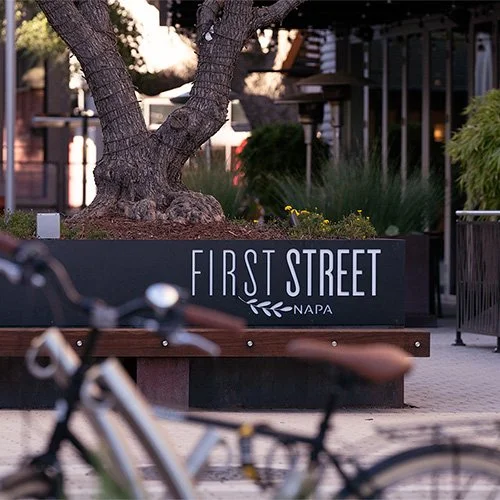
What Makes It Different: Unlike typical developments that create walled-off complexes, this project is actively reconstructing the Brown Street Corridor into an enhanced public paseo. The design deliberately stitches downtown's fabric back together, creating seamless pedestrian flow between Main Street, the 9/11 Memorial Garden, and First Street Napa's collection of shops and restaurants.
The project also preserves community continuity: Don Perico, a local fixture since 1993, will reopen in summer 2026 in the former Buckhorn space at First Street Napa while construction proceeds around them.
The Long-Awaited Post Office Revival
The 1933 Franklin Station Post Office, shuttered since the earthquake, remains one of downtown's most visible reminders of 2014. Developer Jim Keller filed updated plans in mid-2025 for a $250 million transformation that would preserve the Art Deco facade while creating an approximately 120-room boutique hotel.
While this project hasn't broken ground yet, its approval and refinement signals that even Napa's most challenging earthquake casualties are finding paths forward.
A Downtown That's Genuinely Activated
These aren't isolated projects—they represent something more fundamental. Walk through downtown Napa on any given evening and the energy is unmistakable. Over 60 tasting rooms now call downtown home, joined by cocktail destinations like Folklore, The Fink, and ArBAReatum. Recent restaurant additions including Scala and A16 sit alongside morning staples like Moulin Bakery, creating the kind of all-day activity that makes urban neighborhoods thrive.
The completion of streetscape improvements on Lincoln Avenue and Coombs Street, combined with expanded river trails through Oxbow and the ongoing evolution of First Street Napa, means downtown increasingly functions as a unified destination where visitors and residents alike can park once and spend hours discovering what's around the next corner.
Why This Matters Now
For Bay Area families considering Wine Country: The transformation means access to true urban amenities—walkable streets, diverse dining, cultural venues—without sacrificing the wine country lifestyle. When a neighborhood can support both daily errands and weekend entertainment within a few blocks, it changes the calculus on primary versus secondary residence decisions.
For property owners: The narrative has shifted from earthquake recovery to active investment. When major developers commit $300 million+ to a single site, it signals long-term confidence in downtown's trajectory. That confidence ripples into surrounding neighborhoods—Old Town, Fuller Park, and downtown-adjacent areas benefit from proximity to activated urban amenities.
For the luxury residential market: The addition of 161+ hotel rooms plus branded condominiums creates critical mass. These projects generate sustained activity throughout the day and evening—the kind of consistent energy that elevates surrounding property values and creates the walkable lifestyle that Bay Area buyers increasingly prioritize.
The Evolution Continues
By 2027, when the First Street development opens its doors, downtown Napa will have fundamentally transformed. The earthquake forced a rethinking of what downtown could be, and what's emerging is a cohesive urban core that maintains human scale while delivering genuine activation.
The reconstruction of the Brown Street Corridor isn't just about connecting two streets—it's about reconnecting the fabric of downtown itself, creating the pedestrian flow that makes urban neighborhoods thrive.
That's not recovery. That's evolution.